
Friday, May 31st, 2024
Distance Ridden 338 kilometres
Even after, at time of writing, almost twenty-four years together, I still cannot work out what is going on inside Lucie’s head. Luckily, for me, whatever does go on in there usually works to my benefit.
We needed to move on and the coast was our destination. Sadly, the rainfall radar App showed a swirling mass of colours between us and the sea, much of it the dreaded orange which implies the strong likelihood of having to swim for your life !
My wife is a clever girl and plotted a route that, she hoped, would lead us neatly around the kaleidoscope of colour and still bring us to the coast.

After another good breakfast, we took an almost sad farewell of our hostess and set off.
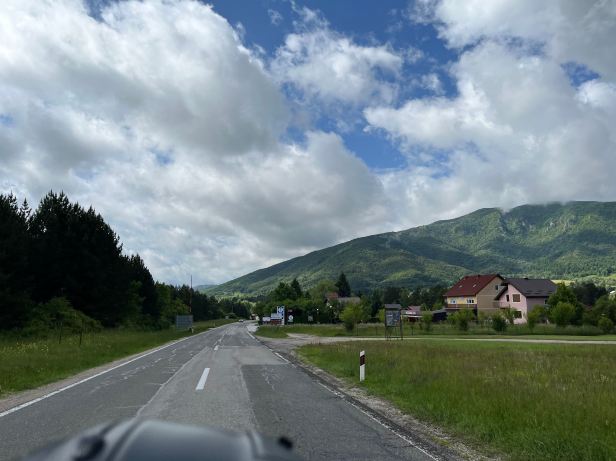
After adding some much needed petrol, we set the SatNav for the town of Dolnji Lapac and road away north-east. We soon entered the region known as Srbska Krajina which, although nominally, at least, within Croatia, is also bordered by Bosnia-Herzgovina.
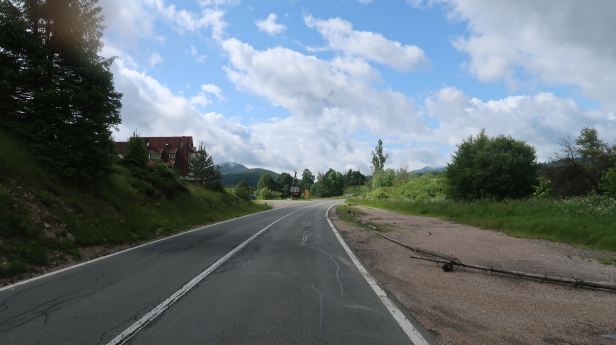


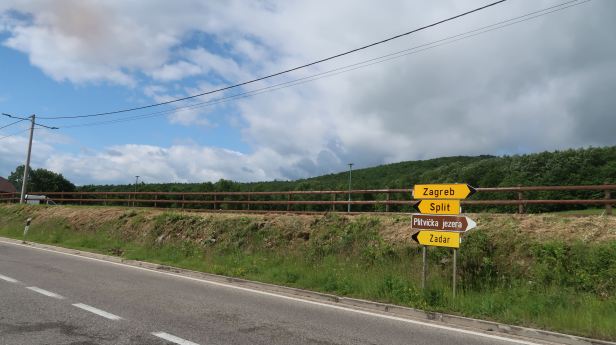

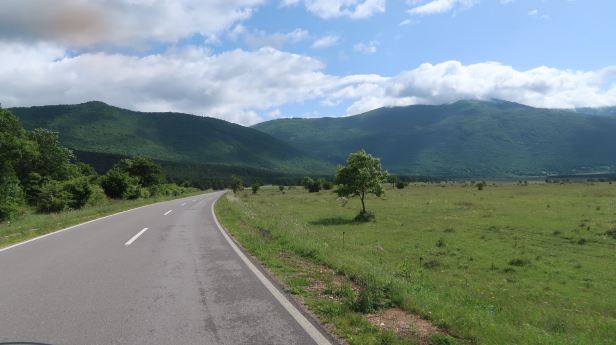
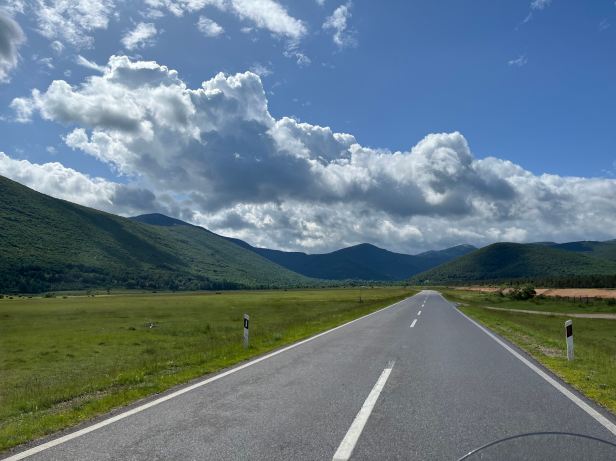
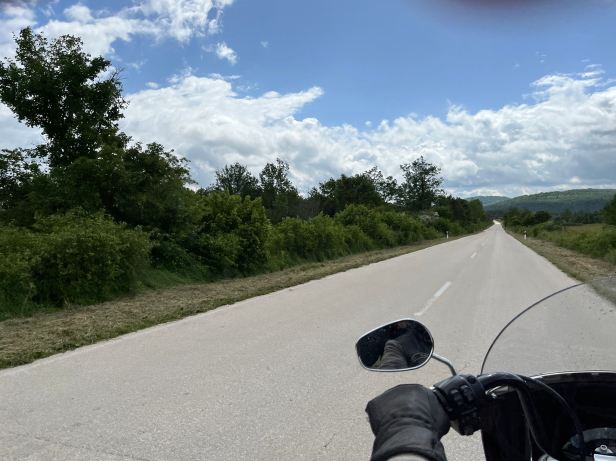
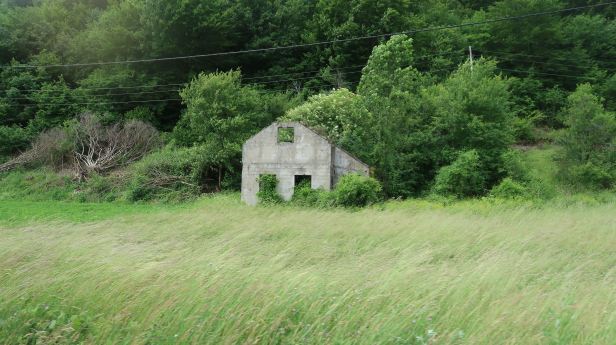
Following the dissolution of Yugoslavia, the population of the area, which was mainly ethnic Serbs tried to set up a breakaway State, with its capital at Knin. The Croats obviously objected and, as part of the mid 90s conflict, there was ferocious fighting there for over four years. It is estimated that over 250,000 ethnic Serbs were forced to leave their homes. Only about 40,000 have ever returned. The whole of our ride, all the way to the coast, went through some spectacularly beautiful scenery, interspersed, at all too regular intervals, with decaying homes, some with bullet holes or explosive damage, that show just how bad things can get when neighbour turns upon neighbour. There were still quite a number of Police posts, strategically placed at intervals all along the route which ran just below the border. Ever watchful appears to be the byword.
It was quite a twisty climb up to Dolnji Lapac. The road was well surface, however and the corners were predictable. In some places, the road was still wet from obviously recent rain and I was a little afraid that Lucie had either miscalculated or that we were catching up to the edge of the storm. At one point, we did endure a brief shower, but that was it for the day.


The road we were on was the 5203 and the mountains of Bosnia-Herzegovina continued to loom on our left, often mysterious in low cloud which covered the peaks. Over the skyline was the Bosnian National Park called Una and, in the village of Doljani, we chanced upon the Bufet Una (53252 Ž5203, 53252, Doljani, Croatia). As Lucie drank her espresso and I my hot chocolate (which they called “cocoa” in those parts) we could probably see the edge of the park in the distance beyond the parked Harley.


We continued on the 5203 which was, in my opinion, a very fine road indeed for reasonably quick motorcycle touring. We never, ever push it, but I was able to safely go at my preferred speed for kilometre after kilometre with no drama. There was hardly any other four-wheeled traffic at all, but quite a few motorcycles did pass us in one direction or the other, taking advantage of good roads and what was a National Holiday.


One village was called, ominously, Srb, most houses lay in ruins.
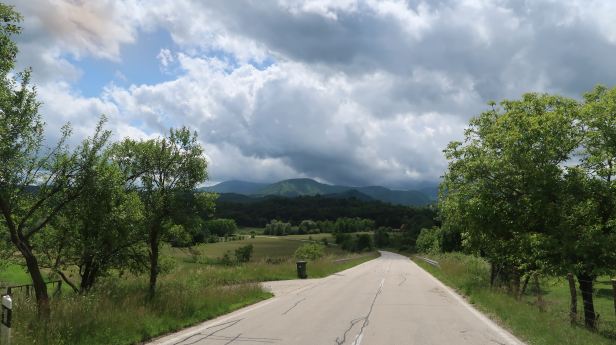
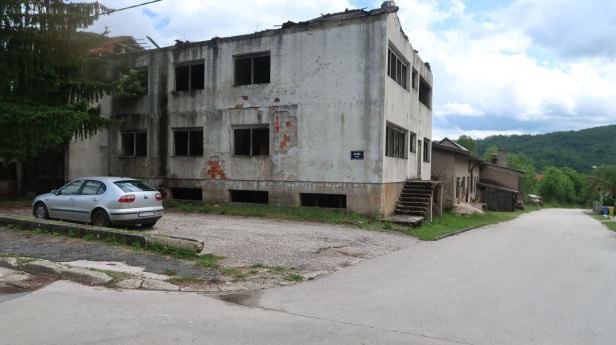
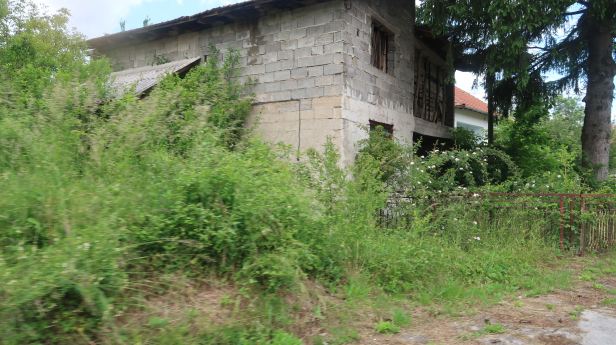
Then, after a run through green countryside, we climbed a steep hill on a series of serpentine bends. Loaded as we were, this was probably the most taxing part of the ride, but the Harley coped easily enough and the views from the top were quite spectacular.


The next town of any note was Otrić, where the road 5203 became Road 1.

The more major road was still through a rural area and everywhere there was evidence of the internecine fighting that went on there less than a generation ago. Shattered, shelled and burned-out houses were everywhere.

Then we approached, via a long downhill serpentine, the town of Knin. As I mentioned before, this would have been the “capital” of breakaway Srbska Krajina region and, as a consequence, most of its inhabitants, who were Serbian, were expelled in the mid 1990s. The whole place had a dismal and decrepit air and we did not care to linger.
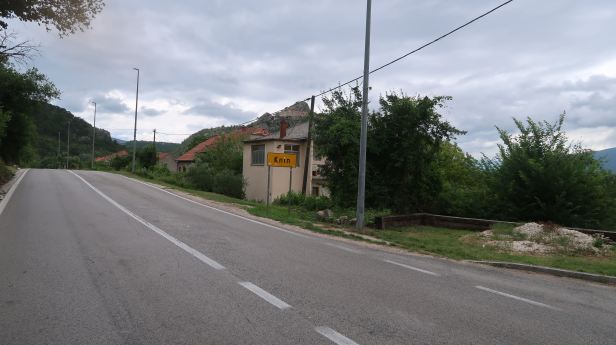
On a hill, high over the town, which was once a centre of some importance, a large, ancient fortress loomed. A huge Croatian flag fluttered in the breeze, a reminder to those watching from nearby Bosnia-Herzegovina perhaps, as to exactly in whose territory the town lays.
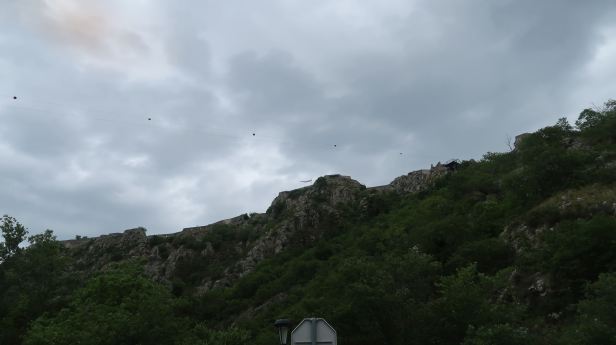

Beside the road, there were many half-populated or seemingly deserted villages and the next significant town, was Drniš. There, yet another steep climb gave us a superb view back the way we had just come.
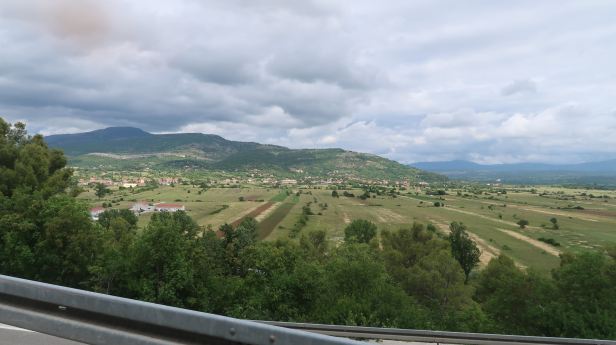
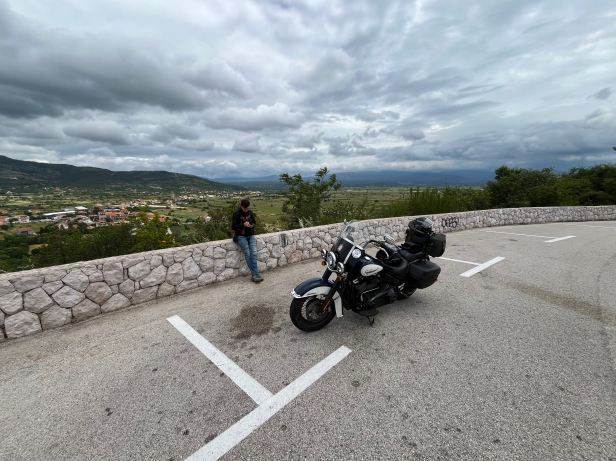
The viewpoint was approached by the worst hairpin bend we encountered all day, I felt obliged, as I turned, to come to a dead halt to avoid any possibility of a close encounter with a large truck coming the other way. We were both well towards the centre of the road, in preparation for the bend and, in truth, never got within two metres of each other. But it is better to be safe than sorry. Particularly as sorry, in this case, means “squashed into the tarmac by a sixteen-wheeler”.
From Drniš, we made the run down to the coast at Šibenik. This was through what was once an area of extremely heavy fighting. More lifeless villages and, near the town of Pokrovnik, where the Croatian Tank Memorial beside the road served as a reminder, attested to this.

Signs, along the roadside, appeared to indicate a danger from wild pigs !

Šibenik, which sits in a charming and sheltered, little coastal inlet is, as they say, a town on the up. We entered it through our first tunnel of the day.

There was a lot of renewal going on and roads so new that they confused the SatNav. We drove down to the street Obala doktor Franje Tudjmana, which runs along the harbour where many huge motor yachts were in evidence. For information, Franjo Tudjman was the first President of Croatia and led the country throughout the Balkan War and up until his death in 1999. He is still idolised by the people and streets bearing his name abound.
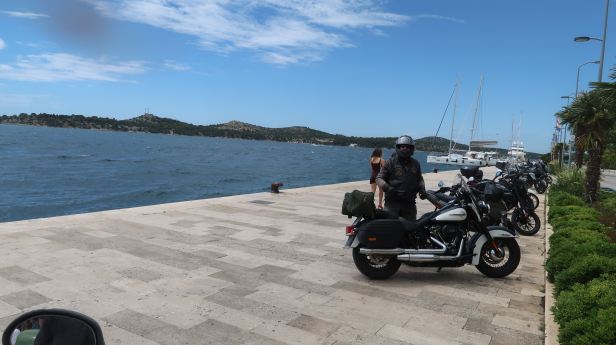


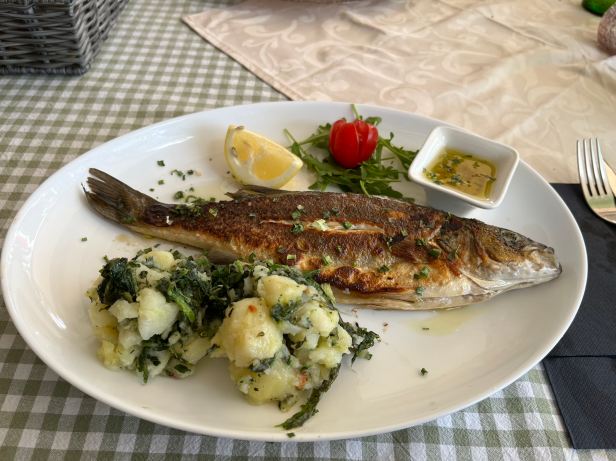
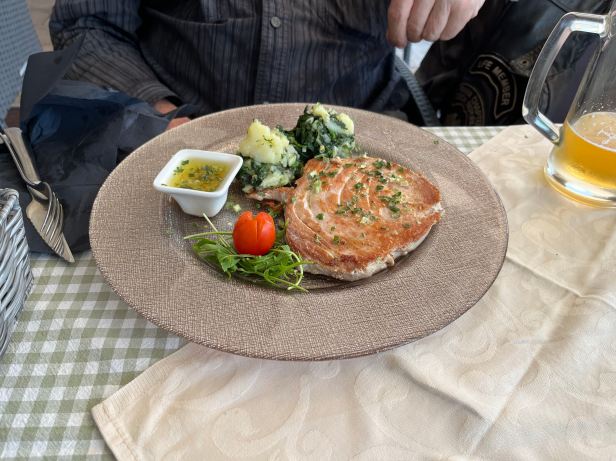
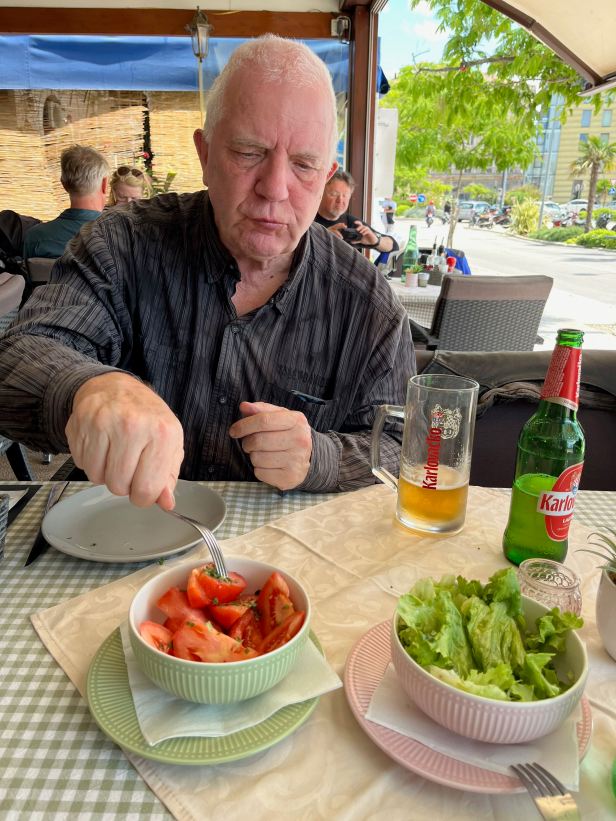
In this particular iteration, we found the Restaurant Lanterna (Obala dr. Franje Tuđmana 6, Šibenik), where we got our first seafood of the trip. This was Sea Bass for Lucie, a tuna steak for me and two salads. The Croatian tomatoes were simply amazing.
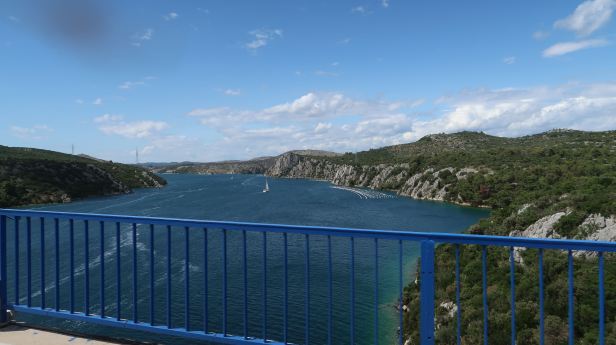
Another thing on our “to do” list was a couple of artistic installations that can be found in the harbour at Zadar, which was about 75 kilometres up the coast. We managed to persuade the SatNav to ignore the motorway and made our way there up the coast road, Route 8. This was slightly shorter, but obviously took longer, although not markedly so than the highway – and the coastal views were simply stunning. Thanks to the bright sunshine and clear blue skies, the colour of the sea was like a holiday advert.

We entered Zadar and some very heavy traffic in which various Croat drivers vied for the title of “Zadar’s Most Homicidal Idiot”. Not even a contender for the “stupidity also rans”, I nevertheless contrived to miss my turning, which sent us several kilometres out of our way. Back on track, we navigated some murderous queues of seemingly lost people and eventually managed to park within a few metres of the harbour wall (Obala kralja Petra Kresimira IV), which was where we wanted to be.
There are two art installations, right next to each other at the water’s edge – and both designed by the architect Nikola Bašić.
The first is the Sun Salutation. This is a series of circles, each one a solar panel, which mirror our solar system in both scope and scale. The Sun, therefore, is of a gigantic size, with comparatively tiny circles representing Mercury, Venus, Earth and Mars seemingly almost touching it and larger circles representing Jupiter, Saturn and Uranus, much further away.


I forgot to check if poor old Pluto and Neptune were there somewhere, but proportionally, those orbs would have been a long way away – almost in Šibenik. Apparently, at night, the stored solar energy gives a light show, but we cannot comment as we were long gone before dark !
Right next to and indeed almost part of the same installation, is the Sea Organ. This comprises a set of underwater pipes that use wave motion to push air through a sound box. The result is a series of sounds that appearing to emanate from right below the marble steps where everyone sits to listen. Because it is totally random, sometimes it is harmonious, sometimes like something from an experimental composer like Philip Glass. We listened for a while and then left.

Getting out of Zadar was a bit of a trial. All the ways out of the town seemed to start in a single, solid line of traffic that only thinned when the road suddenly branched into three at a crossroads. The road was narrow and oncoming traffic made overtaking a risky business. By the time we arrived at the front of the line where the branch point was, the Harley was red hot and being a bit tetchy when it came to finding neutral.
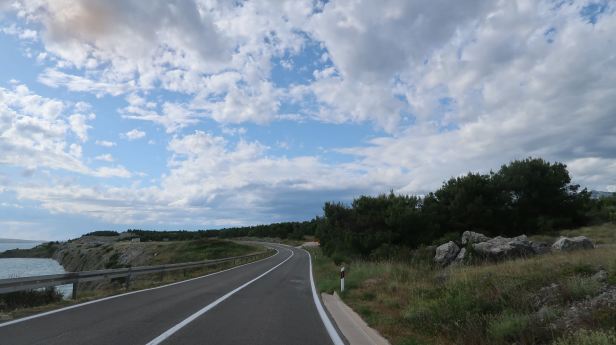
Fortunately, the commuters of Zadar appeared to have no interest in heading north towards Pag Island and, once we cleared the queue we had a nice clear run towards our final destination. That last leg was another very pleasurable ride. It was only a shade over fifty kilometres, but the warmth of the late afternoon, the good, predictable roads and the stunning vistas on either side of them made for a glorious finale to the fun of the day.

Pag Island IS an island, but you get there over a short bridge and, if you blink, it could easily be missed.

Entering the town of Pag, where we were staying, we passed some salt evaporation pans.
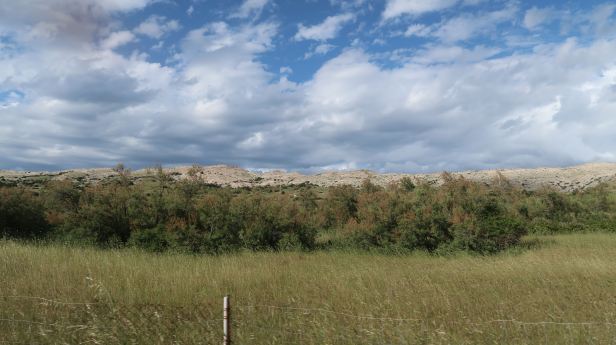
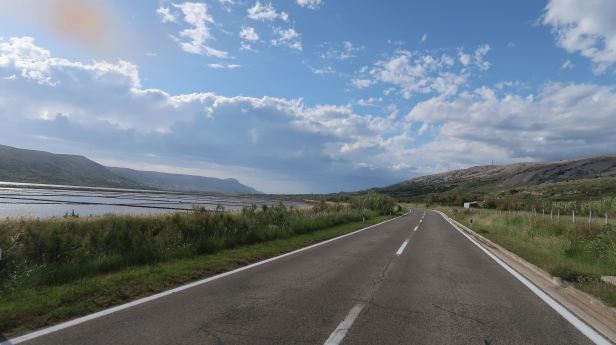
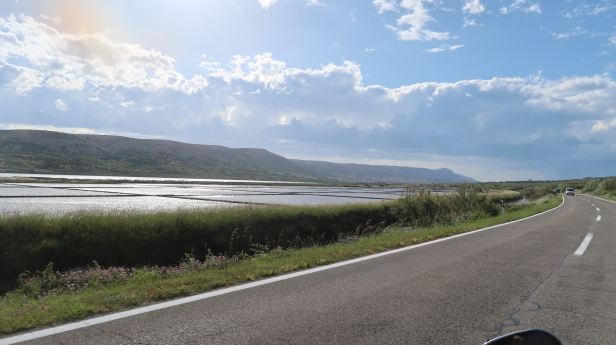
The actual town itself is situated on either side of an inlet many kilometres deep and we crossed to “our” side over a low causeway. The SatNav’s insistence on the shortest route led it to try and persuade us down a gravel track, but we soon found our way around to our hotel, the Boutique Villa Revelin (Ljudevita Gaja 21, Pag).

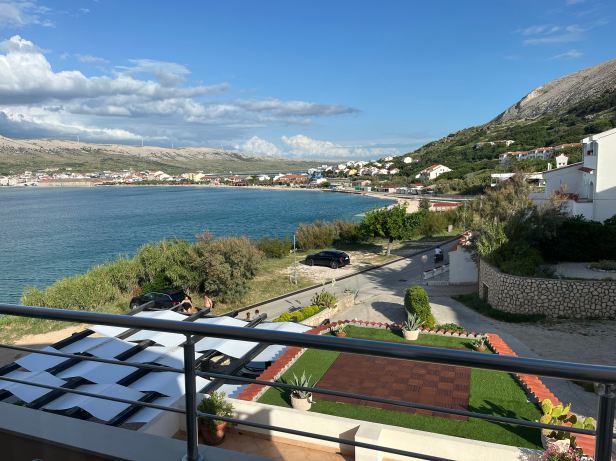
Our room was lovely, thoughtfully equipped and had a terrace and a sea view. Tea/coffee facilities were on the landing.
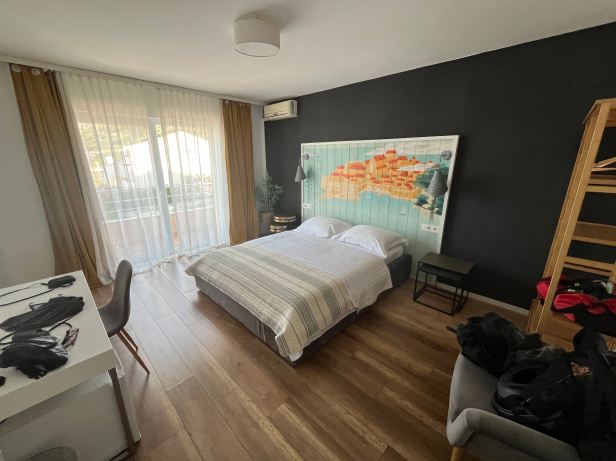
Once we were settled, we walked the kilometre or so to a line of restaurants on the bay. We ate at Bar and Grill Genius (Prosika Ulice, Pag), spurred by its promise that merely by eating there we would both automatically become a genius. Great for me, but a bit retrograde for Lucie !
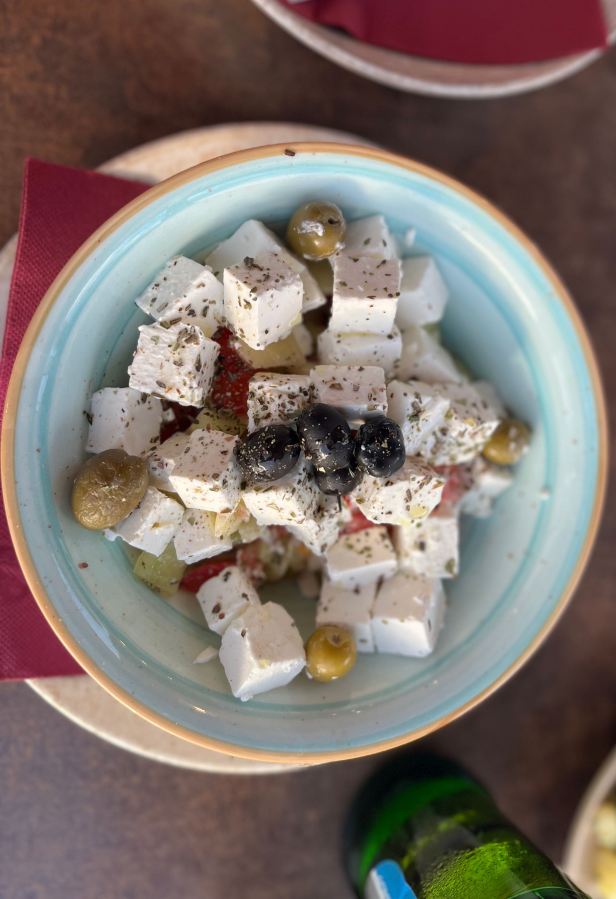
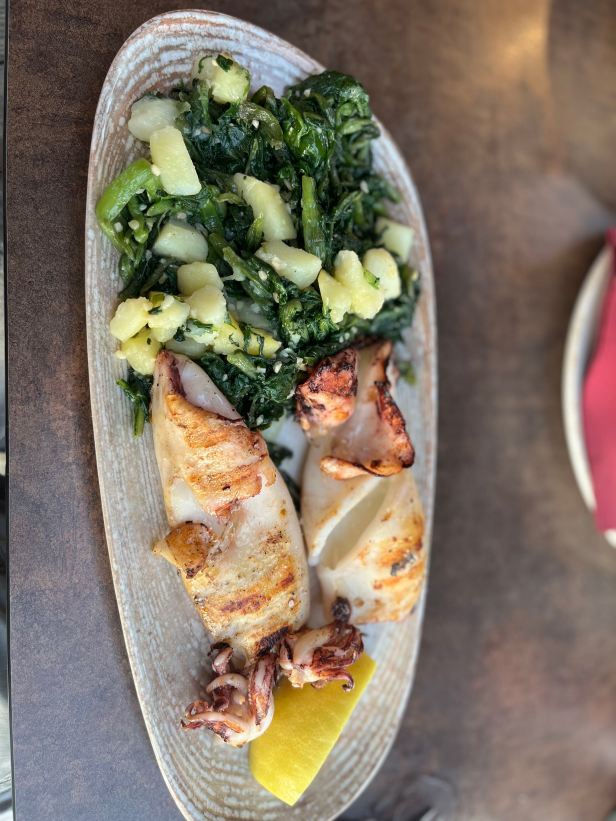
We shared a Balkan salad. Then, I had grilled Calamari and Lucie had Sea Bream. Both were served with potatoes and chard and were excellently done. The service was also very good.



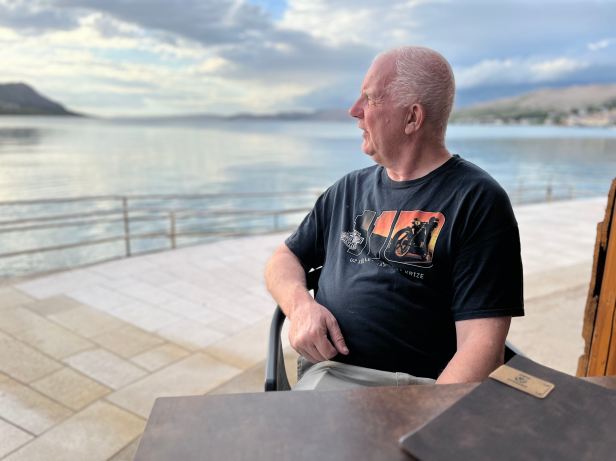
We had a table at the very edge of the terrace, only a couple of metres from the gently lapping tide. It was like being rich !
 Travels with my Harley