AUTHOR’S NOTE
THE EVENTS IN THIS SECTION ALL TOOK PLACE IN 1986
THINGS ARE DIFFERENT NOW ALL THE COUNTRIES VISITED (EXCEPT TURKEY) ARE IN THE EU NOW (2024) – NO VISAS ARE REQUIRED
THE BULK OF THE TEXT IS AS I WROTE IT THEN – SLIGHT ADJUSTMENTS HAVE BEEN MADE IN THE AID OF CLARITY NOW.
Tuesday, July 22nd, 1986
Distance travelled 168 kilometres
I must have been terribly tired the previous night because I had not only fallen asleep in a few seconds, but I had also failed to wake up at dawn. The sun was quite high in the sky when I finally opened my eyes and the clock on the BMW indicated that it was early afternoon……
The roads were no better in daylight than they had been the night before and I had to ride with some caution.
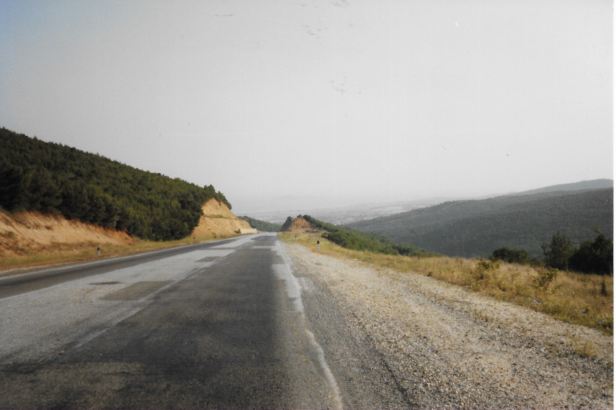
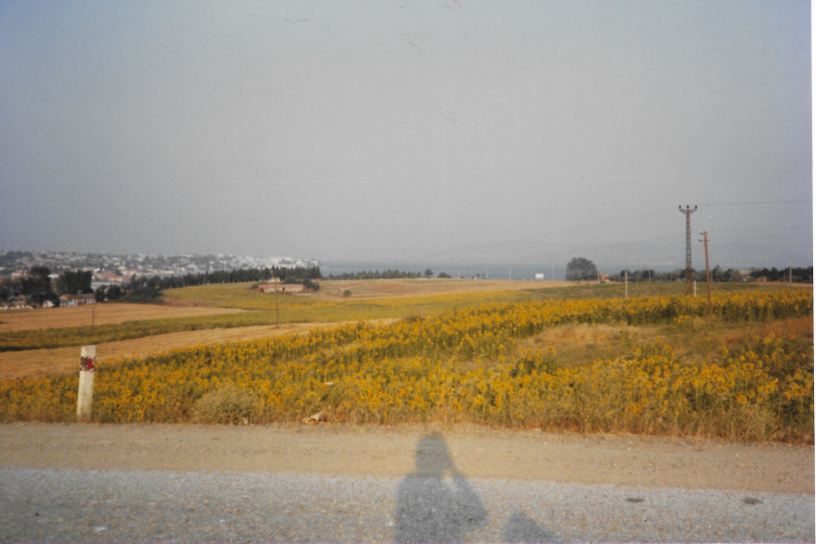
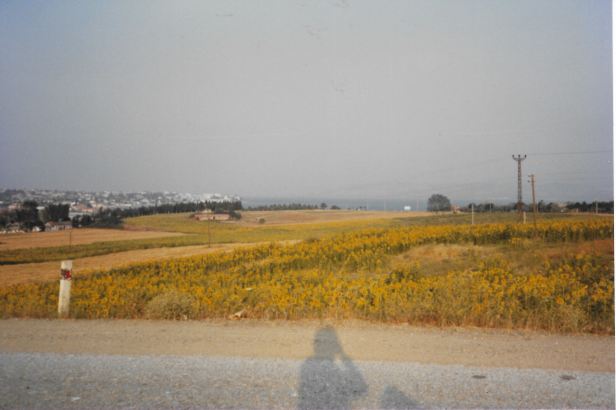
The military were much in evidence at every crossing and junction, but seemed to be there for no specific purpose and I excited no real interest. It was very hot and very dusty and I was pleased that, when I eventually came to the peninsula that separates the Sea of Marmara from the Aegean, there was at least a pleasant breeze. The whole countryside was an undulating sea of yellow as the local agriculture seemed to be solely directed at growing Sunflowers, presumably for their seeds.
As I approached Eceabat, where I hoped to get a ferry to Anatolian (Asiatic) Turkey, I pulled into a garage to top up the tank. In the event, the bike took scarcely any petrol (with gentle use, 60 MPG was easily attainable). The proprietor spoke really excellent English and interrogated me at length (over a couple of beers) about England in general and good old Gary Lineker in particular. Considering the hiding that England had given Turkey (5-0), at their last international encounter a few months before, when Mr L got a hat-trick, their love of Gary was phenomenal ….
A few miles further down the road of was reminded of another encounter between Turkey and England and not a sporting one. I started to pass the cemeteries where a lot of those Turkish soldiers who had been unfortunate enough to be sent to Gallipoli (Gelibolu) in 1915 are buried. Turkey won that one. The lines and lines of graves seemed somehow totally out of place in such stark but lovely scenery.
I had not considered, in what little planning I had done, that Suvla Cove was so near, so sadly I did not have time to recross the peninsula to take a look. Instead, I hastened on towards Cannakale, as I hoped to take a ferry before it got dark.

Once again, unforeseen events frustrated me. Mile after mile of roadworks and diversions meant that it was already dark when I finally came to Eceabat and paid my one dollar for the ferry crossing. There was no ferry at the dock, so I headed to the ramp to wait.

There, I was accosted by a Turkish guy, called Yusuf, who all but implored me to visit his campsite, which was situated on the other side of the water and on the outskirts of Cannakale. It certainly seemed, from his multi-lingual brochure, to look OK and, as he bought me two cups of “Chai”, it would have been churlish to refuse.
The “Chai”, incidentally, was tea, without milk and, although not what I would normally have drunk, it was surprisingly refreshing. The guy also asked if I would give him a lift back as it was now completely dark and he was about to return home himself. I agreed, both out of politeness and also with the full knowledge that he, at least, knew where he was going and it would make finding the place easier.
The ferry crossing was quick, smooth and uneventful. With Yusuf sitting on the pillion seat, I directed my front wheel up the ramp – and into Asia.
We entered and left Cannakale and after travelling a short distance, we came to the campsite which, the map claimed, was by the sea. After a few beers in the camp bar, which was essentially a room with a table and a light bulb, I quickly put up my fly-sheet (the main, inner, part of the tent had been left at home), crawled into my poly bag and fell straight to sleep.
 Travels with my Harley