Wednesday, August 26th, 2026
I passed a peaceful night and awoke at about 06:40, somewhat after the first grey light of dawn. That colour is an assumption that I feel safe in making as the sky was grey and the choppy sea was greyer still.
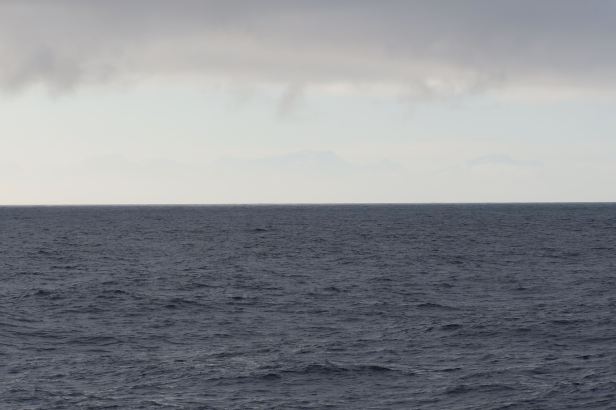
I went to get Lucie her coffee from the lounge. From the panoramic windows there was nothing to see but the sea. We were in the high sixties of latitude. It came to me that, somewhere, not far to the East from where I was standing, was where, in May 1941, a lucky shell from the German battleship Bismarck, sent the Flagship of the Royal Navy, H.M.S. Hood, to the sea floor, almost two and a half kilometres below. The shell went down the funnel and hit the powder magazine. The ship vanished, with almost all hands, in seconds. I bowed my head for a moment and then took Lucie her coffee.
Up on deck, a glorious sunrise began to unfold, but there was no land in sight anywhere.
Breakfast came, but we both ate quite lightly. Surrounded by a cornucopia of goodies I, who can resist anything but temptation, am always inclined to overdo it.
First on the morning’s program was a talk about the colonisation of Greenland from Palaeolithic times. It was not a happy history. Given by Michelle, the deputy team leader, it was informative, but a bit dry. A series of colonisers had appeared, the first seemingly all the way from Kamchatka in Siberia ! Tribes were inclined to follow the coast as the ice thawed and live on small seals and fish. Sadly, the harshness of their existences and the periodic advances and retreats of the ice, eventually drove each set of colonisers to extinction, one after the other. Eventually a tribe (weirdly, called the Dorsets) did make quite a go of it because of improved their hunting techniques. But, as is so often the way, a bigger tribe, with better bows transformed from tools into weapons and even with some whalebone armour, appeared. These were the Thule and the Dorsets were soon goners. It was suggested that some of the Dorsets might have been absorbed the “fun way”, as it is now definitely known that some of the Neanderthals were by Homo-Sapiens, but nobody really knows. Eventually, encroaching ice drove even the Thule to Canada. Next up were the Vikings. It seems that, in the period of about 900 to 1100 AD, the climate of Greenland became very mild. The southern tip of the island was then colonised by Norsemen. These were chiefly by followers of Eric the Red, who had been exiled from Iceland for murdering his neighbour (and who amongst us has not sometimes wanted to do that ?). Vikings measured their status by the number of cows they had. After a few centuries, the ice came back so, although sheep still thrived, cows did not. So off went the Vikings. Some went back to Scandinavia, which had been de-populated by the Black Death and others South West to the eastern shores of what is now America.
“And I know it’s all about the journey
Not the final destination
But what if you get travel sick
Before you’ve even left the station?”
“Grown up lyrics” – Jarvis Cocker (Pulp)
Pride always comes before a fall. I had been strutting my stuff about not getting sea-sick. I never suffered for a second when we were in the South Atlantic and, although our fellow passengers on this trip were falling on all sides (breakfast had been quite thinly attended) I was confident. I still do not know why, but when I stepped back into our cabin after the Greenland history lecture, I just knew. Suffice it to say that I was violently ill – and, ten seconds later, so was Lucie. We so often think alike at the same moment, I hope this is not now going to extend to all our actions !
We rested a while, but the next lecture was a “mandatory” on Zodiac safety, so we had to go. Although we had sat through it on our previous trip, not hearing it meant no landings (and the staff verified attendance by recording our badge numbers). Appended to this was a “dos and don’ts” talk about behaviour on shore (how sad they feel the need to have to tell people) and, of course, a Polar Bear safety talk. We were all there to see Polar Bears, but they are very dangerous. As a consequence, if one is in sight, we cannot land. If one appears after we are on shore, we have to evacuate immediately that it is reported. The guides are armed with large bore rifles as a final resort, but if a bear is shot, it is a serious crime until proved otherwise.
Back to the cabin and, immediately, more sea-sickness ! We passed on the next two talks, about Greenland’s geology and then its birdlife. Equally, we passed on lunch by sleeping through it. We did have to get up to collect our wellies, which they keep calling “muck boots” because of their manufacturer’s Trademark. All landings are “wet” and the guides will not let you onto a Zodiac without them.
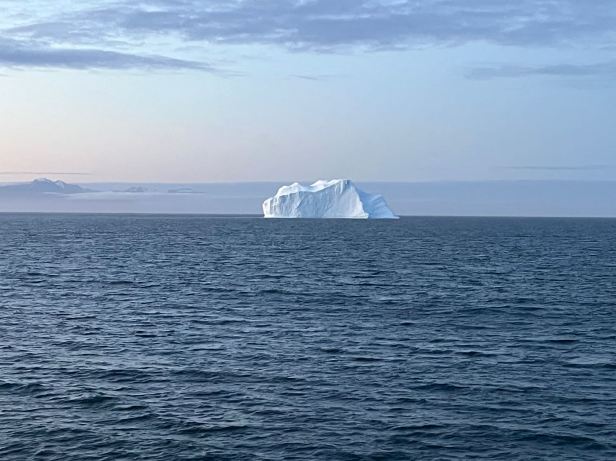
Then, we slept until early evening when it was announced that the coast of Greenland was visible in the distance and we soon saw our first iceberg of the trip..
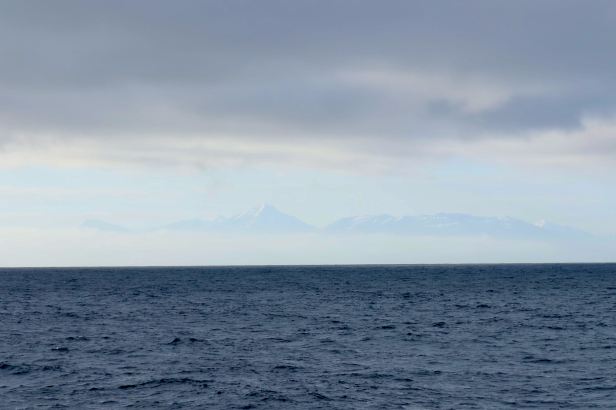
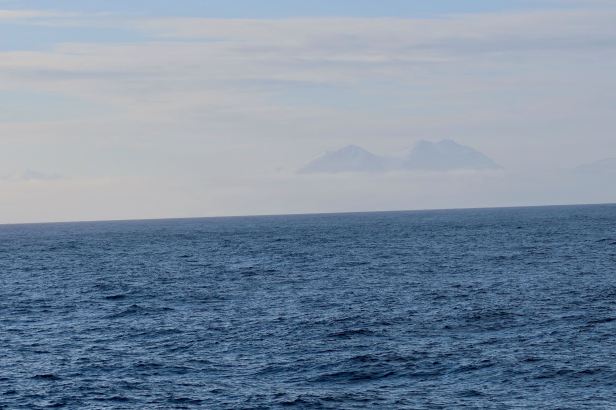
The day’s talks were concluded with what they called a recap, but in this case, as we had not done anything, it was actually a pre cap and the next day’s possible itineraries were outlined. Because of climatic volatility, rain, snow, fog, cloud or worst of all, high wind and the possibility of a bear related delay or cancellation, nothing can be set in stone. There are always plans A, B and C and Pippa, the expedition leader, joked (I hope) that they did not often get to Plan O ……
We decided to give dinner a miss too, to be on the safe side, but we did bag a few slices of bread which, at least, stayed down. We were, in truth, feeling a lot better. The Plancius was now about a kilometre offshore and on the undersea “shelf” which had once marked the furthest extent of the ice-sheet. The sea was much calmer and we crowded the rail (not just us two, everybody) to glory in the spectacular scenery.
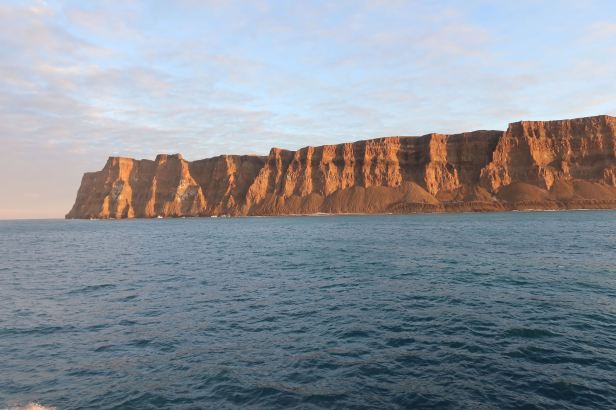
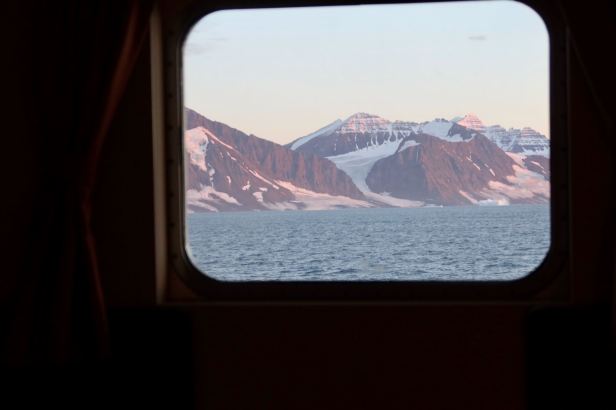
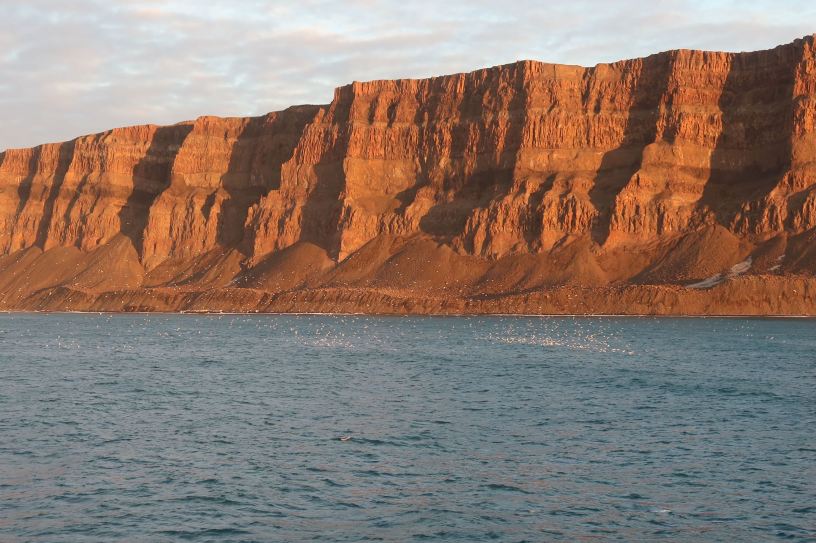
Small icebergs dotted the shoreline and sea birds, from colonies on the towering cliffs, wheeled in their thousands above the crashing surf.
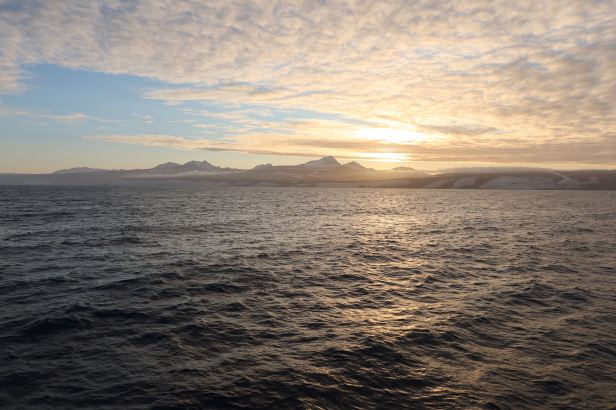
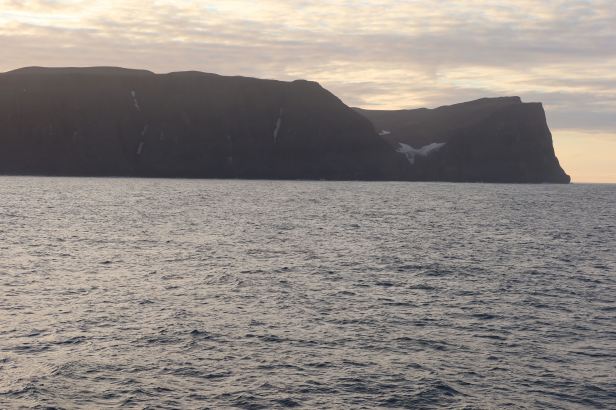
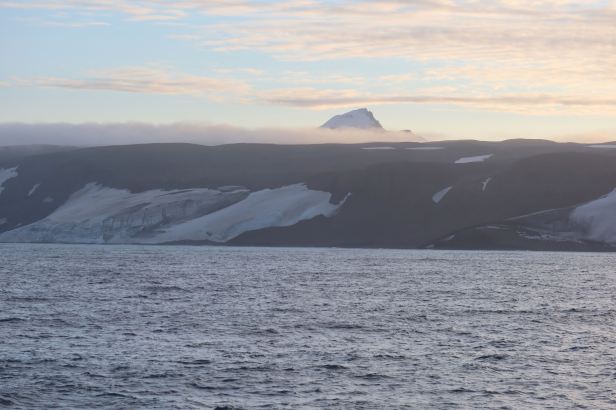
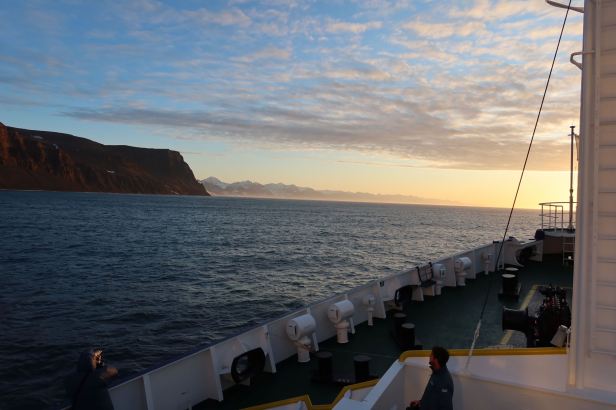
The first serious icebergs of the trip became visible in the milky half light of the day’s end. We were promised still bigger ones the following morning.
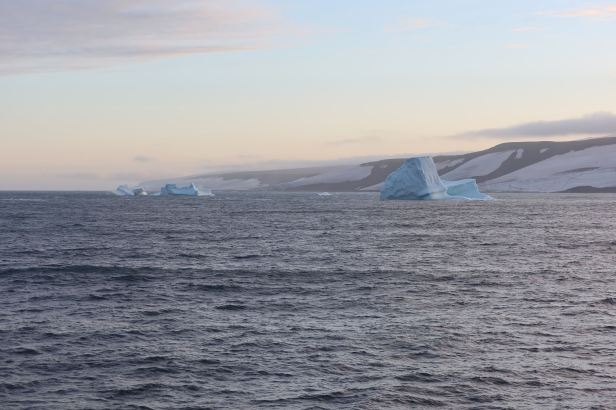
In the last rays of the sun, we passed around Cape Brewster and into the Scoresby Sund.
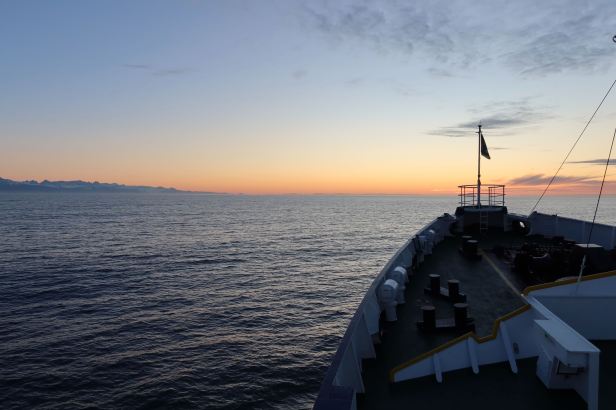
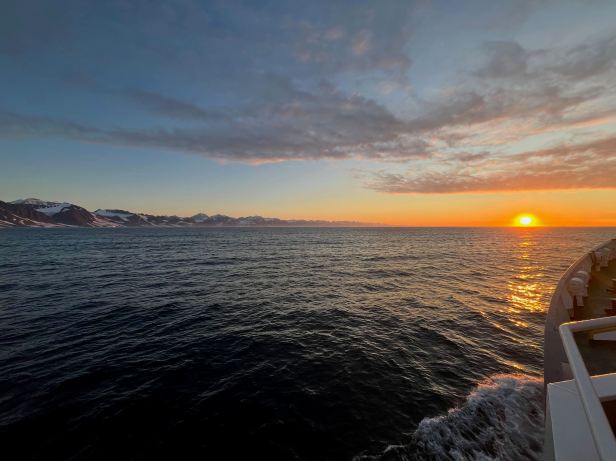
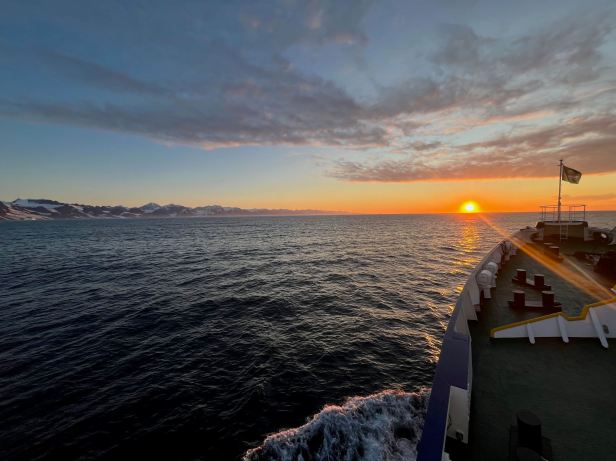
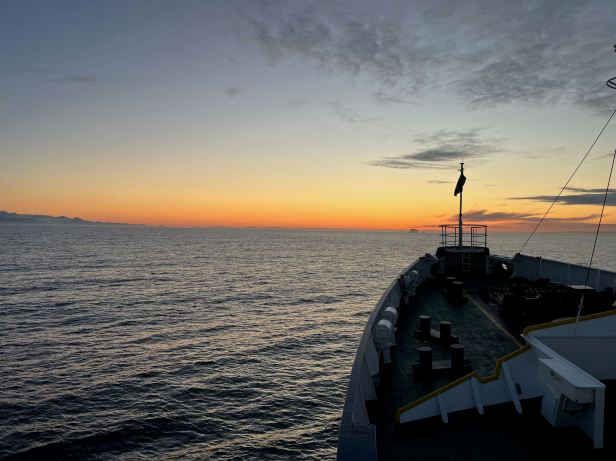
There was a delightful symmetry, at least to me as a Virgo, of departing one country at sunset and arriving, again at sunset, in the next one. Within the Scoresby Sund is the world’s most extensive fjord network and this extends 350 kilometres into the interior. They fjords are very deep too, up to 1800 metres in places.
Dawn, at 05:15 on the following day, promised spectacular viewing, so that was it for this one.

