Friday, September 4th, 2026
As I said before, I have never seen the film “Titanic” – but I do know what happened back in April 1912. Perhaps, as I was aware we were heading directly towards the ice, this made my brain a bit twitchy. Whatever the cause, I jerked awake with the suddenness and completeness that I well knew meant that my night’s sleep was over. Not really a problem, except that my iPhone informed me that it was 02:28 – which probably meant it was 03:28 ship’s time – at least for the time being.
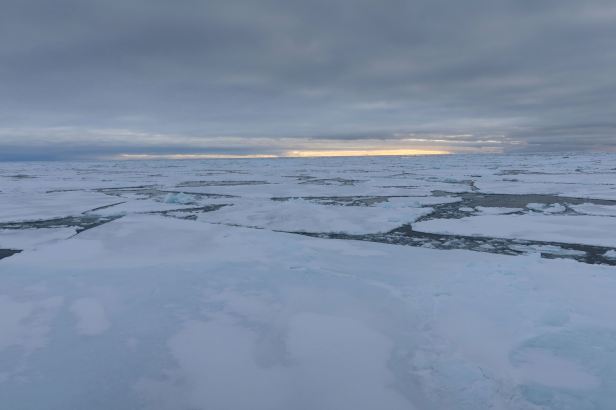
A quick peek out of the window revealed that it was light enough to see – and in the dull light, thanks to Marco, I could see crystals in the water that are called Frazil ice, some of which had consolidated into the next stage, Pancake ice. Further away, these low plates had amalgamated still more and proper Sea-ice was visible. I got up, dressed silently so as not to wake Lucie, grabbed the camera and went upstairs to the lounge. From the bigger windows, larger masses of scattered ice floes were visible. I went out onto the deck and, goodness me, it was freezing, well below zero was my guess and it no place to be with only a tee shirt on. I took a few pictures and went back inside where I made myself a couple of cups of tea.
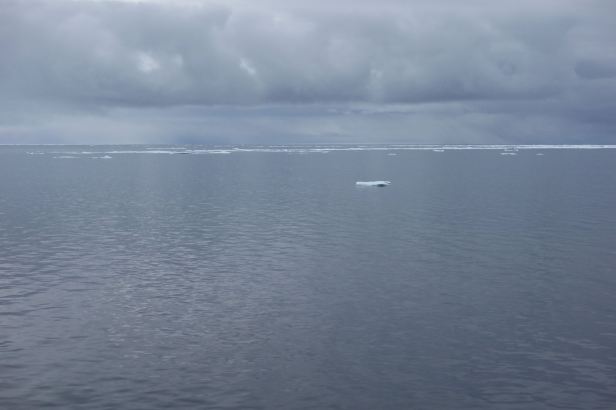
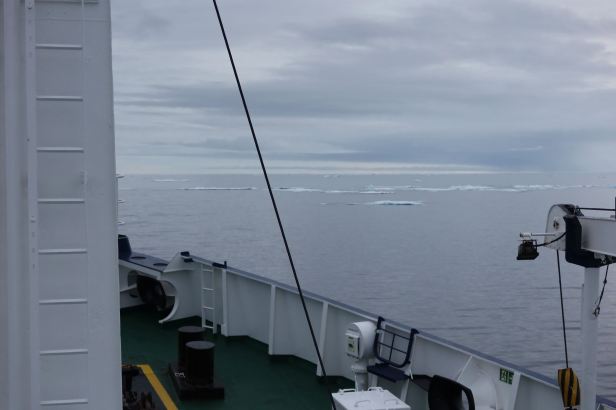
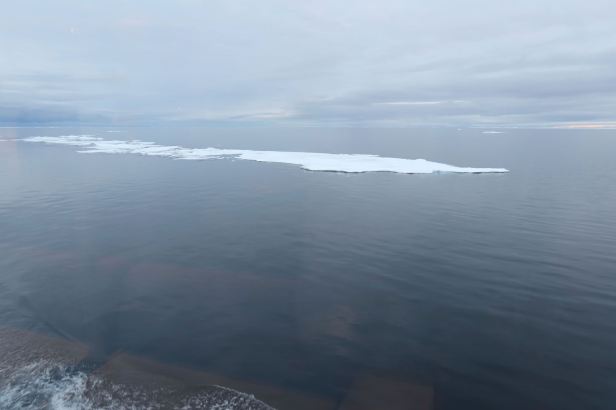
There is a collection of books in the lounge, left, presumably, by people who did not want to carry them home. I had spotted one by an author whose (pulp fiction) works I had read in the past so with either three or four hours until it was time to wake up Lucie, I started to read. I like the convenience of my eReader, but it was nice to hold a real book for once. I was soon immersed, but I kept an eye on the windows and periodically popped outside with the camera as the light strengthened and the sea-ice thickened. It did not get any warmer on deck.
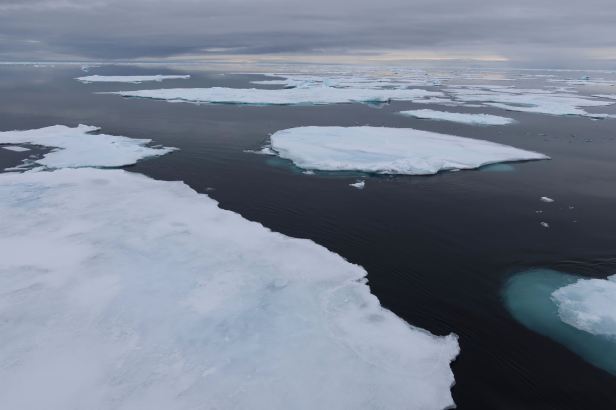
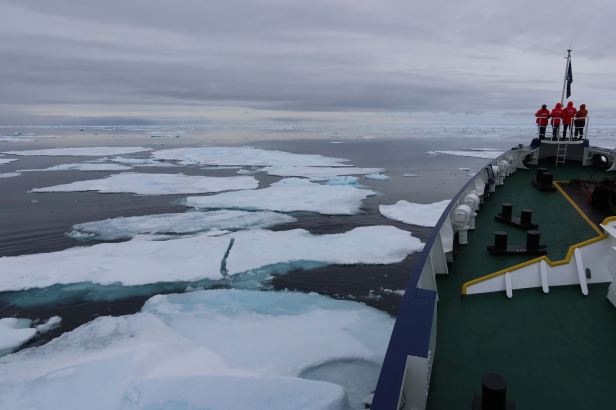
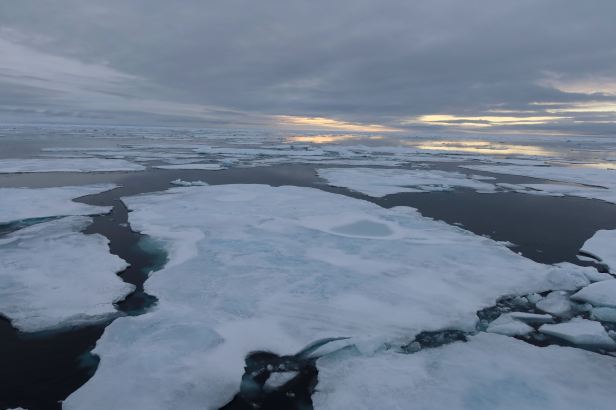
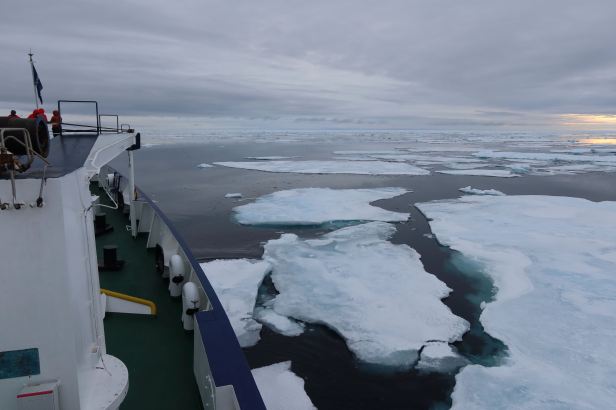
I had read almost 200 pages when I felt a hand descend upon my shoulder. Lost in a world of ruthless assassins, I probably jumped half out of my skin, but it was only my dear wife expressing her thoughts that, on waking and finding me gone had she had feared that “I might have been beamed back up to my home planet”. What a girl she is.
Almost at the same second, Pippa came on the tannoy with an early wake up call to alert those still sleeping to the fact that we had arrived in the sea-ice. The announcement also revealed we were still above the 77th parallel and that it was -3 degrees Celsius outside
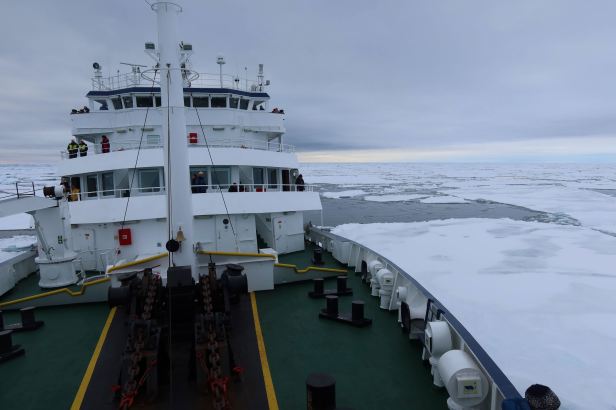
The Plancius moved on steadily through the ice, Captain Christophe seemed very adept at missing the ice floes and, had they not been visible on all sides, we might easily have been cruising on a lake. There were certainly no ominous clanking noises.
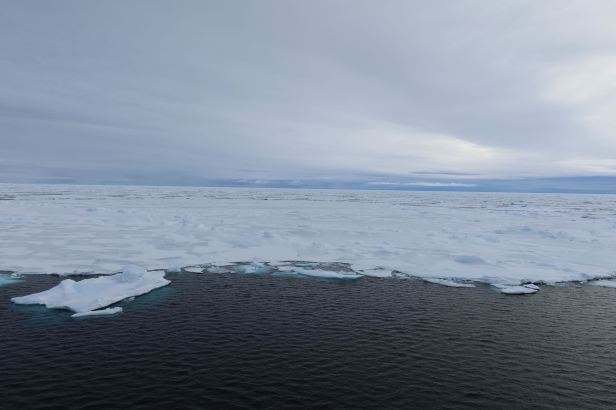
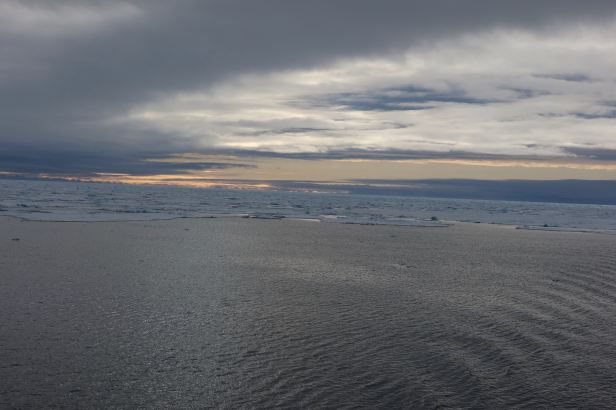
We went for breakfast and watched the floes coming and going as we (well I) enjoyed my fried eggs on toast ……
We continued on our merry way. It was very cold but, alerted by the bridge we periodically swarmed to the railings just in time to not see a seal of some description, as they usually dropped into the water when they saw the ship. There were a lot of seals about and also a lot of gulls. It seemed strange that there was more wildlife to be seen out here where the environment was so much colder and inhospitable, than there had been on the equally inhospitable, but far warmer, shores of Greenland.
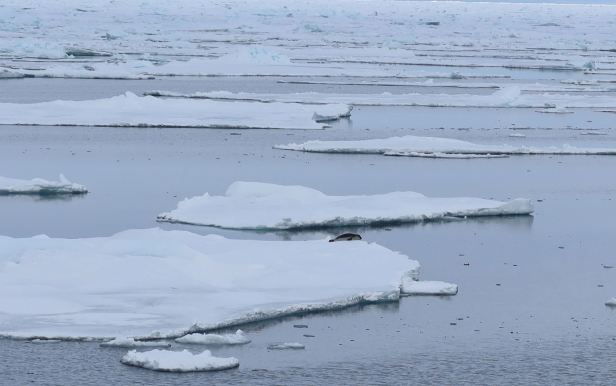
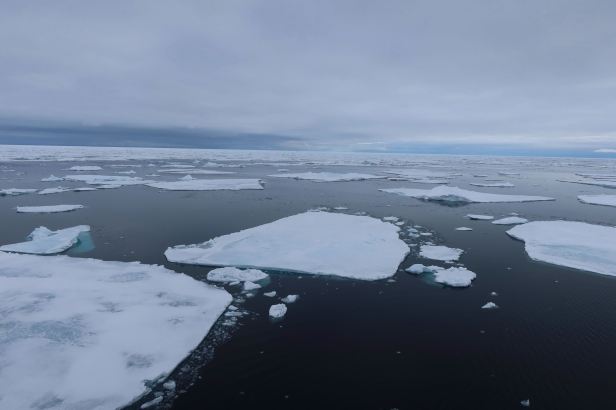
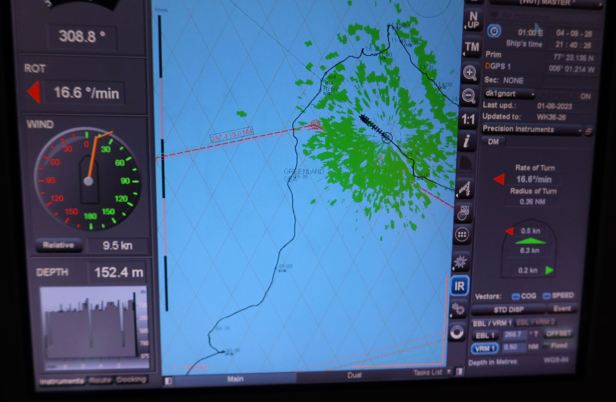
Slowly, the Plancius navigated the paths between the ice flows, occasionally becoming stuck, which necessitated reversing to try again with more momentum or reversing father and trying a slightly different way. The Captain was using satellite imagery and the sea-ice was moving. A Polar Bear was spotted from the bridge, but it was some kilometres away and the ship could not get anywhere near it. Even with our monocular, it was still practically invisible. Even the passengers with the l-o-n-g lenses could only register a small brownish dot. In the wild, although the cubs are a bit closer to the our dazzling, fluffy, white of popular perception, adult Polar Bears are decidedly off-white and can appear a yellower, creamy colour.
Lunch came and, despite having sat around all morning, we went and ate it. The food on board was just too good to ignore. After lunch, I lay my head down, which was a BIG mistake ! I went out like a proverbial light and missed over two hours of thrilling ice. Sadly, I also missed a presentation on plankton by Chloe. Her style would have managed to make it interesting …..
Raised, almost Lazarus like, from my bed, I decided it was time to video the ship breaking some ice. It was still freezing outside. A lot of passengers who had been on deck were sitting in the lounge until their teeth stopped chattering. The raised platform at the very front of the boat actually had a free space so I climbed up there. At first it was a bit dramatic, watching the bow slicing through the floes, but then we stopped, drew back a few metres, went forward – and stopped again. The process was repeated once more, to no avail. We finally could go no further, the floes had closed and the way through them shown on the satellite photos was no more. I was filming, so if you want to see that moment, you will need to watch the video.
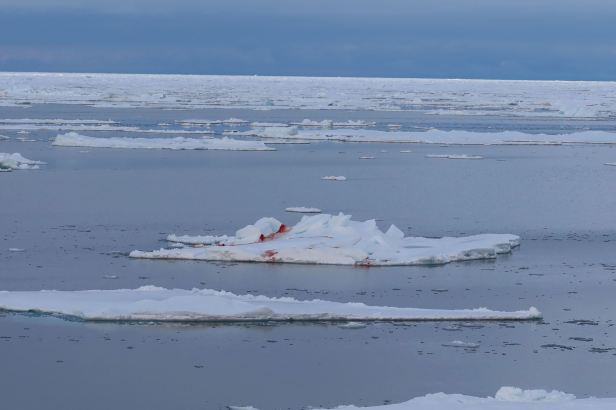
Rather deftly, I thought, Captain Christophe turned the whole vessel around and headed west again in order to try again further South. This actually turned out to be quite fortuitous. The red, in the last of these photos, is not blood, but paint scraped off of the hull as the Plancius pushed its way through …
It was time for the recap and Pippa told us we had enjoyed a day in the ice. I think we all knew that. Then she explained why we had needed to turn around and told us what we would be doing next. It might mean a bit of a longer trip to Svalbard, but that was about it – most of the action would take place overnight. She also said the clocks would go forward a further hour the next day.
Michelle then gave us a bit of information about Petrus Plancius, after who the ship is named.
He was a 16th Century Protestant from Belgium, who fled to Amsterdam because of Catholic persecution. Petrus Plancius is a Latinisation of his Belgian name, Pieter Platvoet (which means “Peter flat foot”). He became a clergyman at the age of only 24, but developed a big interest in maps and went so far as to plagiarise and publish a global map “borrowed” from the (Catholic) Portuguese. That map showed the continents joined to the ice at both ends of the globe, which Plancius believed was not true, so he published a second version showing gaps between the continents and the two Polar ice-caps. Australia was not known about and was not on either version.
Plancius was a founder member of the Dutch East India Company and was very interested in discovering a shorter, Polar route to the Pacific Ocean. He persuaded the Dutch government to fund two exploratory missions, both of which failed – and then he convinced the City of Amsterdam to fund a third. This failed too, but it did discover Spitzbergen (Svalbard) but merely called it “the new land”. On the last mission was Willem Barentz, after who the Barents Sea is named.
Next up was Marco to talk about icebergs, the ones that calve off of glaciers, not the sea-ice outside of the windows. They are given classifications according to their size and shape and 90% of them we do not see, as it is below the water. The talk included footage, filmed by a diver, showing how melted freshwater rises up the submerged sides of an iceberg and sculpts it into ridges. The melting process was also explained. This can suddenly alter the iceberg’s centre-of-gravity, causing it to rapidly flip over, which is why ships do not go very near them.
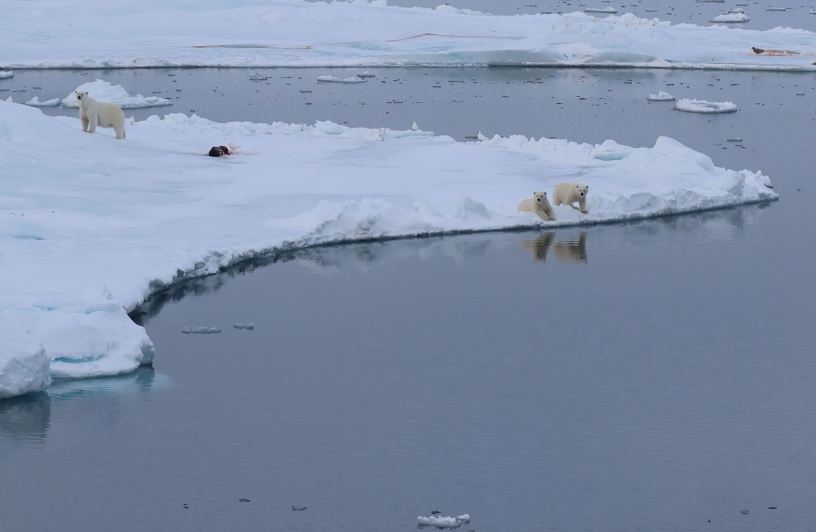
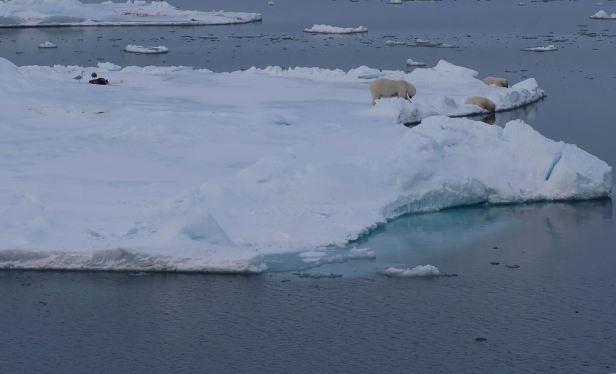
Then it was time for dinner but, naturally, at that very second. Koen, on the bridge, spotted a mother Polar Bear and two cubs on an ice floe. It was a “set” dinner, so Lucie and I gobbled down our starters and then rushed to the front of the ship. In a voyage of ongoing wonder, this was probably the most magical moment thus far. On a nearby floe, and I do mean nearby, was the mother and two, quite big, cubs. Mama Bear had killed a seal, the next floe over had a big reddish patch and had helpfully moved both it and her cubs to the nearer one. We got as close as was legally allowed and, although that was still about four hundred metres away, that was close. We could see them clearly with our naked eyes and very clearly with our monocular. They even look like bears and not blurry dots, on our photos. This sort of incident makes you very shutter-happy, so this is just a few. There is a video of this encounter too, together with more photos, on the videos page.
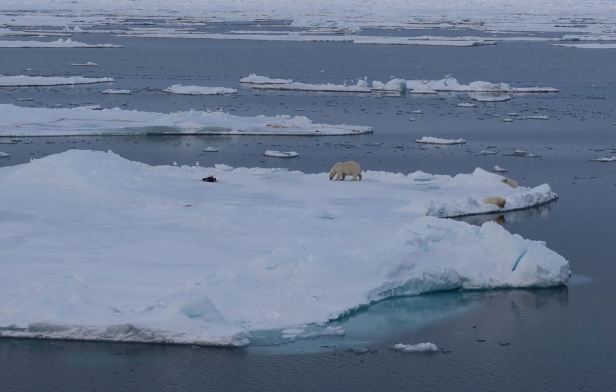
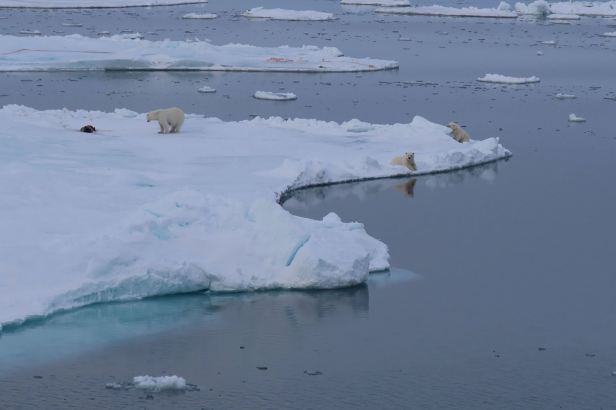
It was hard to tear our eyes away but, finally, we were “beared out” and the ship began to move away – so we went back to the dining room. Our main meals, breaded fish and chips, had been thoughtfully covered with foil by the staff and were still warm, So, we got the Polar Bear sighting of a lifetime and our dinner as well.
What a result !
In the fading light, the Plancius was once again steaming West, in clearer water, prior to making its loop South. The setting sun, on the broken sea ice made for wonderful photos.
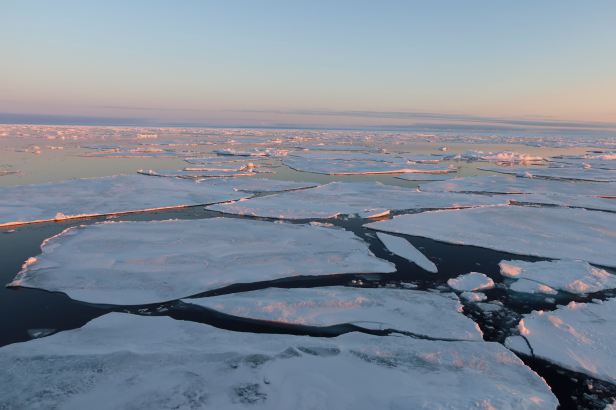
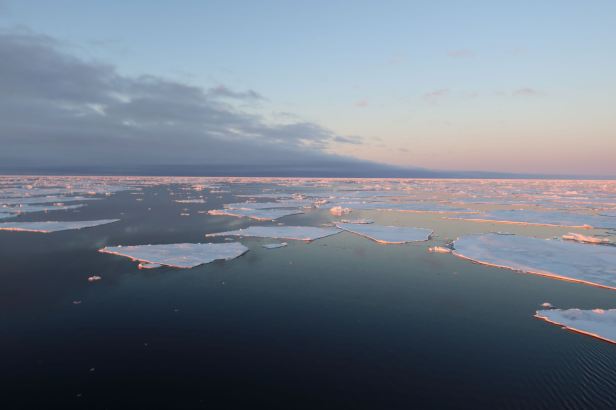
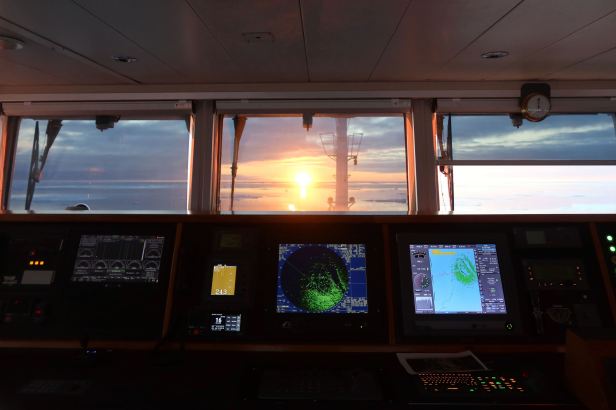
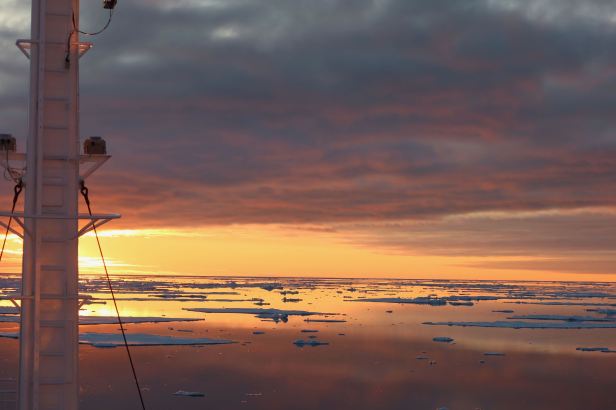
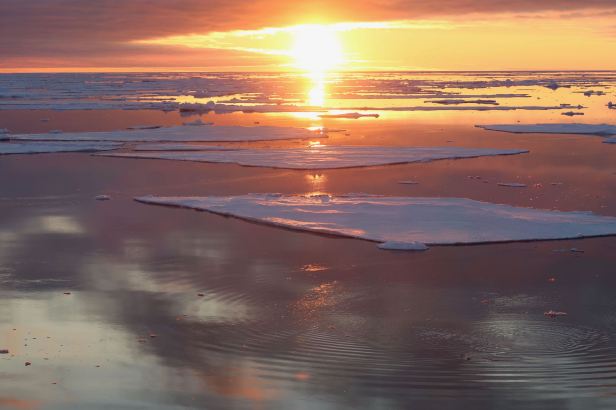
The Captain was going to be in for a busy night, but I would be going to sleep with a great big smile on my face.

